Please fill out the following information, and RRFC Admissions will contact you to discuss our program offerings:
Issue #59 – Job Opportunities & Student Successes
by L. Swift and Jeff McQ
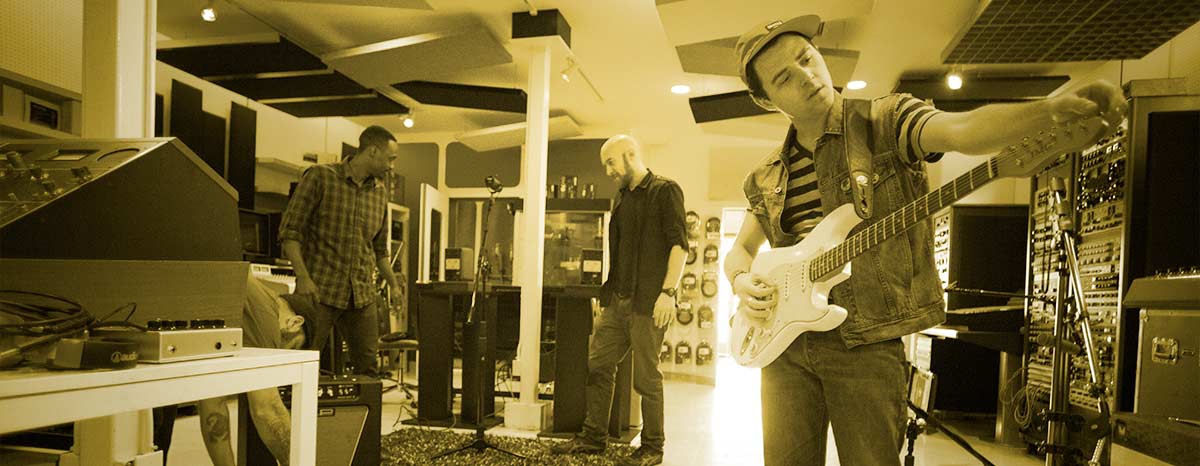

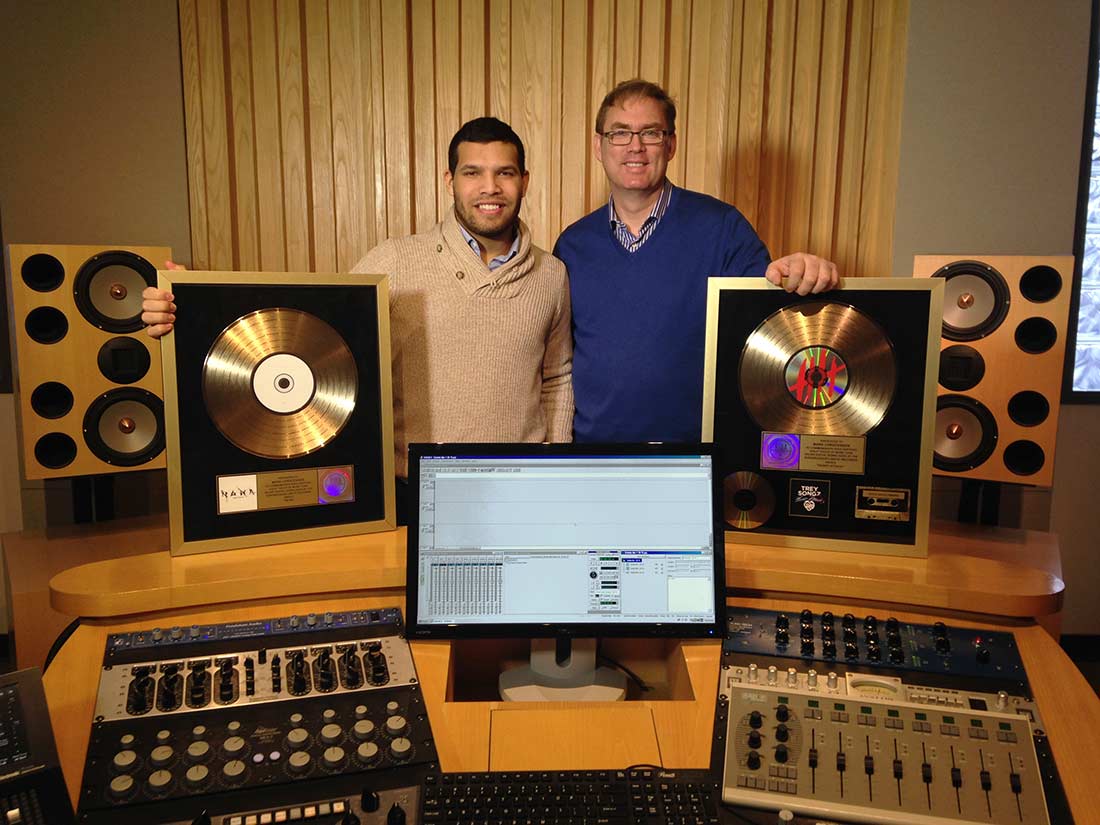 When Nacor Zuluaga first heard about the Recording Connection, he was two weeks away from starting audio classes at a community college in Queens, New York. The chance to work in a real recording studio appealed to him, so he made the last minute decision to withdraw from community college and attend the Recording Connection instead.
“That was a big decision for me,” he says, “but I think that it was the best decision that I could have made. I called [the] college, cancelled everything. My financial aid process was still going, but I decided to just stop that [and] give it a chance.”
As he prepared to begin his apprenticeship at the world-famous Engine Room Audio in New York City, Nacor realized he would have more to deal with than just the challenge of learning audio: there was a language barrier, as well. Having recently moved to New York from Columbia, Nacor spoke only limited English and had some trouble with pronunciation. He understood enough to sit in a classroom and listen but interacting one-on-one from inside a professional recording studio would require greater fluency.
“I did the interview with the studio manager in early January, and I told him I’ll be back in a couple of months once my English is better,” says Nacor. “It was just more like a choice with me, taking some extra time to go out there, practice a little more, get a better conversational level.”
Even with the extra time, Nacor struggled at first. “When I walked into the studio I felt really like disorientated, like lost, like a guy that is just wandering around. I always think about how hard it was to interact with people. I was able to understand a lot, but not to communicate what I thought. So that was very frustrating for like five months. It was the whole time just trying to learn more English and audio.”
Rather than deter him, the struggles with language only strengthened Nacor’s commitment to learn—and his mentor, studio owner Mark Christensen, made sure he understood, the same as with any other student. “One of the strongest things that he did for me—I don’t know if maybe he slowed down his pace with me, in the sense of speaking fast or slow, or using slightly different words so that I could catch up easily, or more easily,” says Nacor. “But then it was interesting, because every time that a new student came into the studio, I was around…And just looking at these guys coming in just like clueless, the same way I was, and hearing him repeating all the stuff that he already taught me, it was just like, ‘Oh, he wasn’t taking me for granted or making me feel like I was behind’—he basically just taught them the way he taught me, and that was just very, very cool for me to realize that.”
When Nacor Zuluaga first heard about the Recording Connection, he was two weeks away from starting audio classes at a community college in Queens, New York. The chance to work in a real recording studio appealed to him, so he made the last minute decision to withdraw from community college and attend the Recording Connection instead.
“That was a big decision for me,” he says, “but I think that it was the best decision that I could have made. I called [the] college, cancelled everything. My financial aid process was still going, but I decided to just stop that [and] give it a chance.”
As he prepared to begin his apprenticeship at the world-famous Engine Room Audio in New York City, Nacor realized he would have more to deal with than just the challenge of learning audio: there was a language barrier, as well. Having recently moved to New York from Columbia, Nacor spoke only limited English and had some trouble with pronunciation. He understood enough to sit in a classroom and listen but interacting one-on-one from inside a professional recording studio would require greater fluency.
“I did the interview with the studio manager in early January, and I told him I’ll be back in a couple of months once my English is better,” says Nacor. “It was just more like a choice with me, taking some extra time to go out there, practice a little more, get a better conversational level.”
Even with the extra time, Nacor struggled at first. “When I walked into the studio I felt really like disorientated, like lost, like a guy that is just wandering around. I always think about how hard it was to interact with people. I was able to understand a lot, but not to communicate what I thought. So that was very frustrating for like five months. It was the whole time just trying to learn more English and audio.”
Rather than deter him, the struggles with language only strengthened Nacor’s commitment to learn—and his mentor, studio owner Mark Christensen, made sure he understood, the same as with any other student. “One of the strongest things that he did for me—I don’t know if maybe he slowed down his pace with me, in the sense of speaking fast or slow, or using slightly different words so that I could catch up easily, or more easily,” says Nacor. “But then it was interesting, because every time that a new student came into the studio, I was around…And just looking at these guys coming in just like clueless, the same way I was, and hearing him repeating all the stuff that he already taught me, it was just like, ‘Oh, he wasn’t taking me for granted or making me feel like I was behind’—he basically just taught them the way he taught me, and that was just very, very cool for me to realize that.”
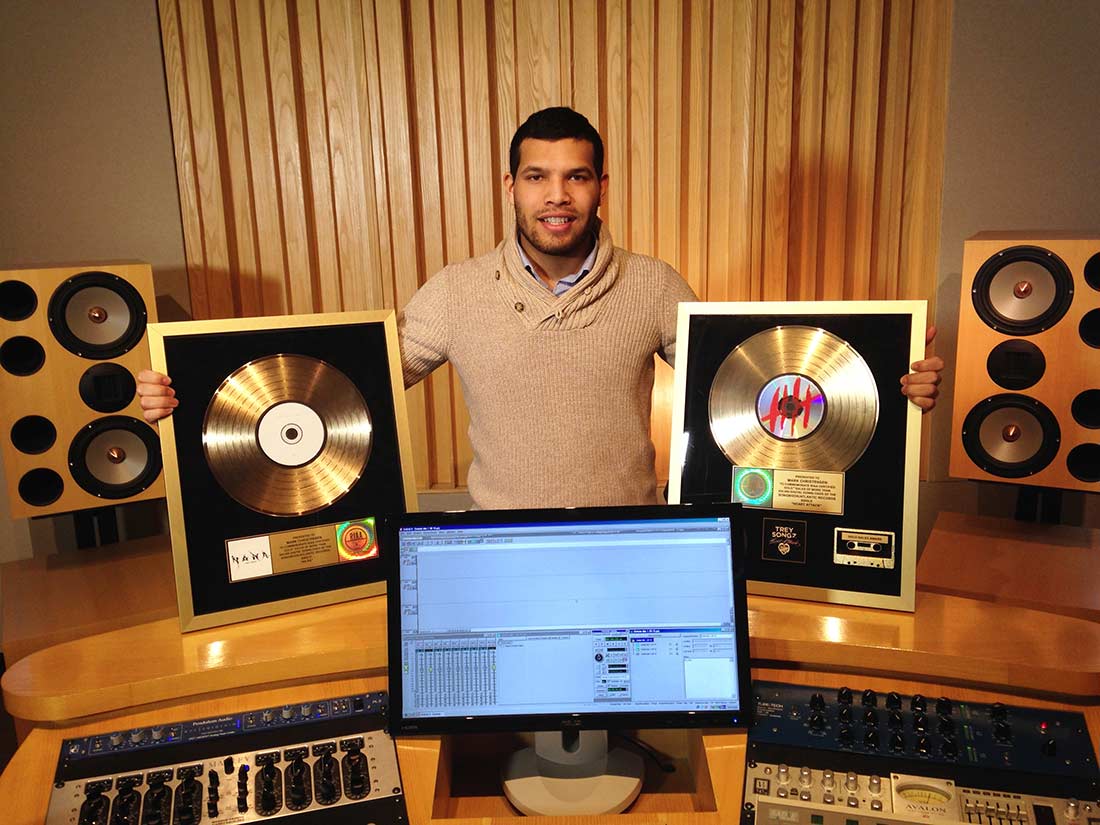 Nacor’s dedication paid off quickly, and it didn’t take long before he’d earned enough of Mark’s trust to start sitting in on recording sessions as an assistant. “I sat in a recording session, full band for a jazz pop album, a few months before I graduated,” he says, “and then I became the almost, the leading engineer of the project just a few months later. So I realized, man, that’s where all my [tuition] money went: just being able to sit in here, and then if I make the right moves and the right decisions, I can easily get this gig, or get involved in this project. And that happened.”
Nacor’s role as Mark’s engineering assistant didn’t end when he finished his apprenticeship. He stayed on at Engine Room for two years, completing work on the jazz pop album, then going on to receive seven gold record awards as Mark’s assistant and accumulate a long list of credits for the work he’s done with major music labels and international artists, including rapper Trey Songz, Italian hip-hop group Club Dogo and Platinum-selling Italian rapper Fedez. “Engine Room has been a great, great opportunity for me in the U.S.,” he says.
Now speaking English almost effortlessly, Nacor continues to work on building his career with his own clients. Recently letting go of his assistant position to focus more on freelancing, he still works closely with Engine Room and brings all his clients into the studio—a benefit he continues to receive from the trust he built with Mark Christensen as a student, and something Nacor stresses as important for other students.
“He opened the door for me to just be there as long as I wanted, but [only] after I gained or earned the trust,” he says. “It wasn’t right off the bat, but maybe two months into the program I was able just to come in on call whenever there was something going on.”
As for making his own way in the business, Nacor admits it’s sometimes a challenge—but then again, Nacor is no stranger to overcoming obstacles. “A lot of people just go on in life like, ‘Okay whatever, yeah, I have a job and I can pay all the bills,'” he says, “But once you actually start achieving things in something that you’re very passionate about, I don’t think there’s [anything like] that feeling of accomplishment once you’re doing what you’re passionate about or what you want to do.”
Hear some of Nacor’s recent work in our Apprentice Media section below.
Nacor’s dedication paid off quickly, and it didn’t take long before he’d earned enough of Mark’s trust to start sitting in on recording sessions as an assistant. “I sat in a recording session, full band for a jazz pop album, a few months before I graduated,” he says, “and then I became the almost, the leading engineer of the project just a few months later. So I realized, man, that’s where all my [tuition] money went: just being able to sit in here, and then if I make the right moves and the right decisions, I can easily get this gig, or get involved in this project. And that happened.”
Nacor’s role as Mark’s engineering assistant didn’t end when he finished his apprenticeship. He stayed on at Engine Room for two years, completing work on the jazz pop album, then going on to receive seven gold record awards as Mark’s assistant and accumulate a long list of credits for the work he’s done with major music labels and international artists, including rapper Trey Songz, Italian hip-hop group Club Dogo and Platinum-selling Italian rapper Fedez. “Engine Room has been a great, great opportunity for me in the U.S.,” he says.
Now speaking English almost effortlessly, Nacor continues to work on building his career with his own clients. Recently letting go of his assistant position to focus more on freelancing, he still works closely with Engine Room and brings all his clients into the studio—a benefit he continues to receive from the trust he built with Mark Christensen as a student, and something Nacor stresses as important for other students.
“He opened the door for me to just be there as long as I wanted, but [only] after I gained or earned the trust,” he says. “It wasn’t right off the bat, but maybe two months into the program I was able just to come in on call whenever there was something going on.”
As for making his own way in the business, Nacor admits it’s sometimes a challenge—but then again, Nacor is no stranger to overcoming obstacles. “A lot of people just go on in life like, ‘Okay whatever, yeah, I have a job and I can pay all the bills,'” he says, “But once you actually start achieving things in something that you’re very passionate about, I don’t think there’s [anything like] that feeling of accomplishment once you’re doing what you’re passionate about or what you want to do.”
Hear some of Nacor’s recent work in our Apprentice Media section below.
or call (800) 755-7597

RRFC is education upgraded for the 21st century.
Get the latest career advice, insider production tips, and more!
Please fill out the following information, and RRFC Admissions will contact you to discuss our program offerings:
Stay in the Loop: Subscribe for RRFC news & updates!
© 2025 Recording Radio Film Connection & CASA Schools. All Rights Reserved.