
Please fill out the following information, and RRFC Admissions will contact you to discuss our program offerings:
Issue #58 – Mentor News
by L. Swift and Jeff McQ
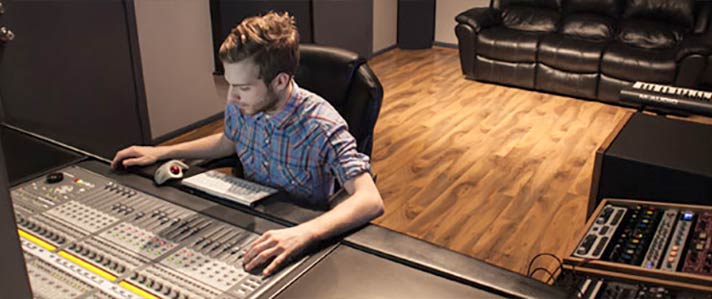 “Once that light bulb goes off,” John continues, “and they understand the way that all these frequencies relate, how to get the most out of the kick drum, how to get the most out sub bass, how to get the most out of your high-end…they’re like, ‘Okay, I could do this actually with this other track I’m working on for a friend that does hip-hop.’…Once that thing clicks in their head and it all makes sense, those things don’t just apply to their specific interests. They apply to everything.”
While John obviously has no problem adapting the apprenticeship course to each student’s interests, he makes sure they understand how these concepts apply across the board. To him, in fact, it’s critical to be able to apply universal mix theory across genres, especially if someone plans to produce.
“My style of teaching centers around tone, production value, the kind of gear that really facilitates that production value,” he says. “To be a producer of music, I think you have to have a really wide range of appreciation for different kinds of music, so that if a project walks through the door and it’s country, that you know what you’re doing and you understand the language well enough to where if you’re describing this record that he’s into, you know what parts of that record that you can bring into his sound…I want these kids to have the sensibility to be able to talk to a client and to communicate effectively enough to know what they’re looking for, and to be able to contribute something and really add something to the project.”
When it comes to the best way to learn these things, John is adamant about the one-on-one learning approach, as opposed to the classroom format. “The problem I found with college was I was always the most advanced kid in my class,” he says. “As you can imagine, the teacher is not going to keep my pace and then leave behind the slowest kids in the class. The attention was paid to the students who weren’t mastering the information yet…It was frustrating for me, because I plateaued really early on, and still had a year left to go. I had to ask very direct questions to get something out of that day’s class, and I’m spending x amount of dollars to be there.
“Once that light bulb goes off,” John continues, “and they understand the way that all these frequencies relate, how to get the most out of the kick drum, how to get the most out sub bass, how to get the most out of your high-end…they’re like, ‘Okay, I could do this actually with this other track I’m working on for a friend that does hip-hop.’…Once that thing clicks in their head and it all makes sense, those things don’t just apply to their specific interests. They apply to everything.”
While John obviously has no problem adapting the apprenticeship course to each student’s interests, he makes sure they understand how these concepts apply across the board. To him, in fact, it’s critical to be able to apply universal mix theory across genres, especially if someone plans to produce.
“My style of teaching centers around tone, production value, the kind of gear that really facilitates that production value,” he says. “To be a producer of music, I think you have to have a really wide range of appreciation for different kinds of music, so that if a project walks through the door and it’s country, that you know what you’re doing and you understand the language well enough to where if you’re describing this record that he’s into, you know what parts of that record that you can bring into his sound…I want these kids to have the sensibility to be able to talk to a client and to communicate effectively enough to know what they’re looking for, and to be able to contribute something and really add something to the project.”
When it comes to the best way to learn these things, John is adamant about the one-on-one learning approach, as opposed to the classroom format. “The problem I found with college was I was always the most advanced kid in my class,” he says. “As you can imagine, the teacher is not going to keep my pace and then leave behind the slowest kids in the class. The attention was paid to the students who weren’t mastering the information yet…It was frustrating for me, because I plateaued really early on, and still had a year left to go. I had to ask very direct questions to get something out of that day’s class, and I’m spending x amount of dollars to be there.
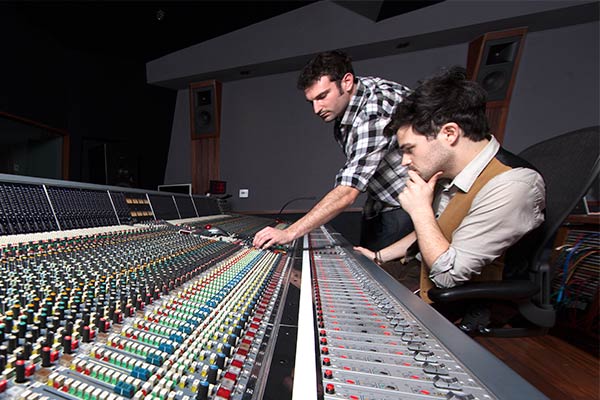 “The one-on-one approach just allows us to focus on very specific goals for the students. They have an end result, and we want to get them there. There’s no distraction in terms of someone being a lot less prepared than them, or someone being a lot further along. Kind of their pace. We spend a good amount of time with these students to where, at the end, they’re getting closer to that result.”
And of course, John says, training apprentices on-the-job is good for the studio, as well. “It helps to have educated students around in a work environment like ours, because there is no shortage of work to do…The more educated hands we have on deck, the better service we can provide to our clients. It never hurts to have a person who is competent around who can walk client through the studio and give a tour, or to have someone be able to set up a drum kit and me not even be in the room… It’s a 2-way street, you know? They get the tools necessary to be able to pursue that next step in their careers, and we get educated students who are really helpful in this kind of environment.”
In John’s eyes, at the end of the day, the combining of universal mix theory with personalized training, one-on-one attention, and the hands-on experience of the studio all help to give his students a fighting chance to make it in the industry. “We’re trying to provide these kids with an opportunity and a skillset that’s going to enable them to really follow their dream,” he says. “As silly as that sounds, that really is what we’re trying to do.”
“The one-on-one approach just allows us to focus on very specific goals for the students. They have an end result, and we want to get them there. There’s no distraction in terms of someone being a lot less prepared than them, or someone being a lot further along. Kind of their pace. We spend a good amount of time with these students to where, at the end, they’re getting closer to that result.”
And of course, John says, training apprentices on-the-job is good for the studio, as well. “It helps to have educated students around in a work environment like ours, because there is no shortage of work to do…The more educated hands we have on deck, the better service we can provide to our clients. It never hurts to have a person who is competent around who can walk client through the studio and give a tour, or to have someone be able to set up a drum kit and me not even be in the room… It’s a 2-way street, you know? They get the tools necessary to be able to pursue that next step in their careers, and we get educated students who are really helpful in this kind of environment.”
In John’s eyes, at the end of the day, the combining of universal mix theory with personalized training, one-on-one attention, and the hands-on experience of the studio all help to give his students a fighting chance to make it in the industry. “We’re trying to provide these kids with an opportunity and a skillset that’s going to enable them to really follow their dream,” he says. “As silly as that sounds, that really is what we’re trying to do.”
or call (800) 755-7597

RRFC is education upgraded for the 21st century.
Get the latest career advice, insider production tips, and more!
Please fill out the following information, and RRFC Admissions will contact you to discuss our program offerings:
Stay in the Loop: Subscribe for RRFC news & updates!
© 2025 Recording Radio Film Connection & CASA Schools. All Rights Reserved.