Please fill out the following information, and RRFC Admissions will contact you to discuss our program offerings:
Issue #54 – Mentor News
by L. Swift and Jeff McQ
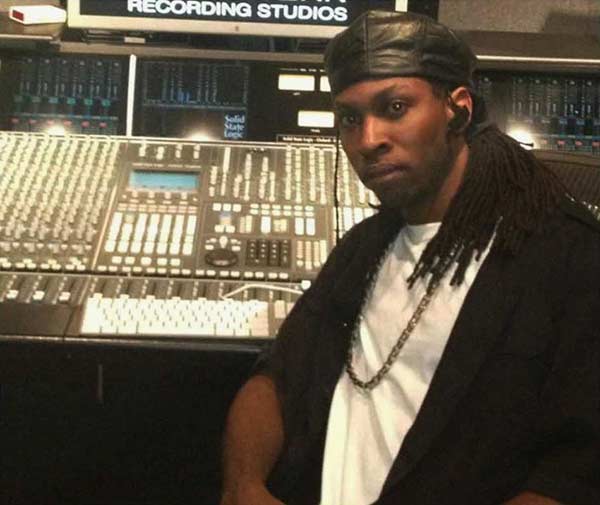 Recording Connection mentor Felipe Frazier (known by his industry moniker as “AudioFlip”) of East Atlanta Records is rapidly building a name for himself in the Atlanta, Georgia music scene, not only working with a number of great up-and-coming and underground artists, but also doing post audio for a number of films. Rather than hiring on as a staff engineer at one of the local recording studios, he works for himself as a freelance engineer, which gives him the opportunity to work in several of Atlanta’s best studios (and also gives his apprentices the chance to experience a diversity of setups and gear!).
Working in a variety of studios as AudioFlip does, he understands the importance of getting your hands on lots of gear, perhaps more than most—which is one of the reasons he enjoys being a Recording Connection mentor. “I went to Full Sail University,” he says, “so I definitely went to one of the largest schools. In that situation, there’s a lot more paperwork, so if I just guessed at the right answers, I could possibly go through… I didn’t get too many real case scenarios.” For AudioFlip, this basically meant re-learning after he graduated. “Most of the stuff, I was like, ‘Oh yeah, I remember reading this at school,’ but I still had to learn it in the real world.”
AudioFlip took this experience to heart, and when he began taking on apprentices a few years ago, he made sure the hands-on element was firmly in place. “I help them through some of the scenarios that they most definitely are going to run into when they start working with people in the actual real world,” he says. “Not just knowing what to do, but a style of doing it to keep clients in your studio more interested than actually just knowing the stuff….Worst-case scenario is make or create a scenario. Like I’ll unplug the microphone, stuff like that, to see if they figure it out, troubleshoot. I do more real world. I believe any mentor should give more of a real world sense versus just learning in a classroom and taking a multiple choice questionnaire at the end.”
While he’s currently working with eight different apprentices, some of his earlier students still stand out to him, and they still keep in touch. “Sabrina Williams was really into the editing part,” he recalls. “She was really good at editing, producing, making stuff sound cool. She loved to auto-tune stuff. She was really good at creating a sound out of nothing. Some of the stuff she produced, [I] was like, ‘Where did you come up with that?’ It was non-traditional, really good.”
Adonis Odin was another standout. “He leaned more towards hip hop and rap,” says AudioFlip. “He was really down with the fundamentals of working in the studio—engineering, recording, mix and mastering. He’s the one, out of all of them, who’s going to do close to what I do throughout his career. He’s really good at talking to people and keeping his composure, professionalism, not really trying to be a star. He can really use the fundamentals of recording that gives the best quality.”
From an engineering standpoint, AudioFlip is all about being creative and trying things, and he tries to impart that creativity to his students. “Honestly, I don’t use presets,” he says. “I tell my students, ‘Don’t listen to me, I’m not the All-Knowing, but I don’t like presets because I like to attack every project as if I just stepped into the studio.’
“Everybody wants an instant thing,” he continues, “and just because it’s instant doesn’t mean it’s the best. It might sound good, but you’d be surprised at how phenomenal it might sound if you just went and did it without a preset…A lot of monster ideas came from a mistake. I made a mistake and turned a knob too high…and I was like, ‘Oh, I gotta use that.’ When you use presets, you go away from stuff like that.”
AudioFlip’s advice for up-and-comers to the music industry? “Staying and strive, staying and strive is really keen,” he says. “I say definitely read as much material as possible…There’s just so many different kind of devices, technology, especially now. Digital versus audio, you don’t know what you work best with unless you know it all, or at least know a little bit about it… Just try to learn the most about the tools you’re using. As far as your creativeness, that’s in you. But you gotta be one with the tools you’re using to really create what’s in your head. Because otherwise, if you let your tools run you, you’re going to be a subject of that.”
Recording Connection mentor Felipe Frazier (known by his industry moniker as “AudioFlip”) of East Atlanta Records is rapidly building a name for himself in the Atlanta, Georgia music scene, not only working with a number of great up-and-coming and underground artists, but also doing post audio for a number of films. Rather than hiring on as a staff engineer at one of the local recording studios, he works for himself as a freelance engineer, which gives him the opportunity to work in several of Atlanta’s best studios (and also gives his apprentices the chance to experience a diversity of setups and gear!).
Working in a variety of studios as AudioFlip does, he understands the importance of getting your hands on lots of gear, perhaps more than most—which is one of the reasons he enjoys being a Recording Connection mentor. “I went to Full Sail University,” he says, “so I definitely went to one of the largest schools. In that situation, there’s a lot more paperwork, so if I just guessed at the right answers, I could possibly go through… I didn’t get too many real case scenarios.” For AudioFlip, this basically meant re-learning after he graduated. “Most of the stuff, I was like, ‘Oh yeah, I remember reading this at school,’ but I still had to learn it in the real world.”
AudioFlip took this experience to heart, and when he began taking on apprentices a few years ago, he made sure the hands-on element was firmly in place. “I help them through some of the scenarios that they most definitely are going to run into when they start working with people in the actual real world,” he says. “Not just knowing what to do, but a style of doing it to keep clients in your studio more interested than actually just knowing the stuff….Worst-case scenario is make or create a scenario. Like I’ll unplug the microphone, stuff like that, to see if they figure it out, troubleshoot. I do more real world. I believe any mentor should give more of a real world sense versus just learning in a classroom and taking a multiple choice questionnaire at the end.”
While he’s currently working with eight different apprentices, some of his earlier students still stand out to him, and they still keep in touch. “Sabrina Williams was really into the editing part,” he recalls. “She was really good at editing, producing, making stuff sound cool. She loved to auto-tune stuff. She was really good at creating a sound out of nothing. Some of the stuff she produced, [I] was like, ‘Where did you come up with that?’ It was non-traditional, really good.”
Adonis Odin was another standout. “He leaned more towards hip hop and rap,” says AudioFlip. “He was really down with the fundamentals of working in the studio—engineering, recording, mix and mastering. He’s the one, out of all of them, who’s going to do close to what I do throughout his career. He’s really good at talking to people and keeping his composure, professionalism, not really trying to be a star. He can really use the fundamentals of recording that gives the best quality.”
From an engineering standpoint, AudioFlip is all about being creative and trying things, and he tries to impart that creativity to his students. “Honestly, I don’t use presets,” he says. “I tell my students, ‘Don’t listen to me, I’m not the All-Knowing, but I don’t like presets because I like to attack every project as if I just stepped into the studio.’
“Everybody wants an instant thing,” he continues, “and just because it’s instant doesn’t mean it’s the best. It might sound good, but you’d be surprised at how phenomenal it might sound if you just went and did it without a preset…A lot of monster ideas came from a mistake. I made a mistake and turned a knob too high…and I was like, ‘Oh, I gotta use that.’ When you use presets, you go away from stuff like that.”
AudioFlip’s advice for up-and-comers to the music industry? “Staying and strive, staying and strive is really keen,” he says. “I say definitely read as much material as possible…There’s just so many different kind of devices, technology, especially now. Digital versus audio, you don’t know what you work best with unless you know it all, or at least know a little bit about it… Just try to learn the most about the tools you’re using. As far as your creativeness, that’s in you. But you gotta be one with the tools you’re using to really create what’s in your head. Because otherwise, if you let your tools run you, you’re going to be a subject of that.”
or call (800) 755-7597
RRFC is education upgraded for the 21st century.
Get the latest career advice, insider production tips, and more!
Please fill out the following information, and RRFC Admissions will contact you to discuss our program offerings:
Stay in the Loop: Subscribe for RRFC news & updates!
© 2025 Recording Radio Film Connection & CASA Schools. All Rights Reserved.