
Please fill out the following information, and RRFC Admissions will contact you to discuss our program offerings:
Issue #133 – Mentor News
by L. Swift and Jeff McQ
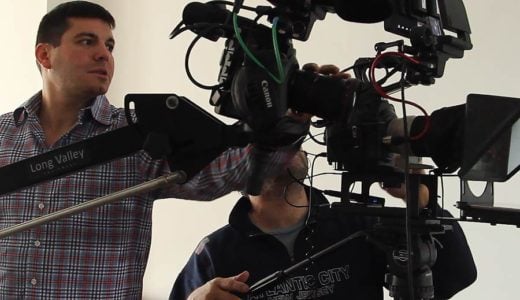 RRFC: So let’s talk about your journey into film and video production–how you became interested, your training, and how you ended up starting your own company.
Adam Lebenstein: When I went to college, my goal was to become a sports broadcaster. And I went to Ithaca College, and I did some sports radio, and I hosted some television there. And while I was hosting television, I kind of got into all aspects of it, the cameras, and what it takes to really produce a show, rundowns of scripts, and seeing it all come together, and I enjoyed the producing part of it…Then at my first job out of school, a startup TV network called College Sports Television, what kind of caught my eye was the features department, which was doing short stories on athletes. And they would send a few people out there with a camera and a microphone, basically, and send them around the country, telling these short stories on athletes. So that was kind of where I determined I wanted to be, and I kind of weaseled my way into that department, from originals to features. So I got a lot of cool experience traveling around and being part of larger crews and seeing how these guys who were a year or two ahead of me were doing it with lighting the interviews, and all the aspects of it. So I was doing that for a couple years. And then an opportunity at another company came up to be part of a series that aired on the NFL Network…and I stayed with that company and worked on events for them and different sorts of programming that I hadn’t really done before. It was kind of a permalance position over there. That’s when I launched my own production company…I just kind of went out there and started hustling and building my company.
RRFC: What was it about the features that you really liked? What was it that spoke to you?
Adam: I think it was kind of the storytelling aspect of it. A little bit of it was the excitement…was getting out of the office and kind of being on set, being out with people, meeting new people. And you really got to see all aspects of production. You got to see it all together because you would shoot it, and then you would take that back and work with an editor and put your piece together. The nature of it was definitely exciting as well.
RRFC: You said you sort of “weaseled” your way into features. What did you do to be proactive? How did you get yourself onto that team?
Adam: Well, I think buying my own camera, which was the same as the one they were using was kind of a neat little trick because things would come up where they would [say], “Oh, everyone is booked on something. Where can we turn next?” And there I am, smiling, holding up the box my camera came in. So it almost forced them into throwing me out there when I wasn’t quite ready…You’re right about just being proactive, just telling other people what you want to do, and keeping an ear out when other people are on the phone and maybe discussing a problem or saying, “Oh, I don’t know who could do that.” And kind of being around there to volunteer and say, “Oh, I could tag along. Send me out there.” That sort of thing.
RRFC: So in the past few years, entrepreneurship has become such a huge thing in this business. As you started your company, were you seeing the changes in the culture, and how did you adapt?
Adam: The big thing was kind of the move to digital. It was every company needing a website. And you couldn’t really predict the video explosion, but you knew that there needed to be low budget video solutions that weren’t just for a TV platform. I think that’s kind of…I kind of hit it at the right time where there was a huge audience of people who needed web video, and it was growing by the day. And that was kind of what I was playing towards, was servicing that…As I got more and more experiences and moved into this corporate world, I had more agency experience and marketing company experience. Agencies are very niche and they’re set up that way. It’s like, “We have our creatives. We have our art director. We have our copywriters. Copywriter writes. Art director does the art, does the visuals.” They kind of look at production that way….But that’s not how I look at things. I look at my greatest asset being resourcefulness. Whatever your need is, I’m going to find a great solution for it.
RRFC: How does all this tie in to the experience your Film Connection students receive when apprenticing with you?
Adam: The experience you get when you become a part of our company is [that] you’re not going to be doing the same thing every day. You’re not going to just be sitting there going through your chapters. You’re going to go on 10 shoots that are all very different. Some of them are sit-down interviews. Some of them are what some people would consider boring, maybe filming somebody working at a computer screen. And some of them are bigger budget productions with weeks of preparation and prop creation and set design. All sorts of things like that are projects we’re working on right now. You’re not going to get a single-track experience…You definitely see all the different parts that go into this industry when you come work here.
RRFC: Can you tell us about some of your students and how they’ve done?
RRFC: So let’s talk about your journey into film and video production–how you became interested, your training, and how you ended up starting your own company.
Adam Lebenstein: When I went to college, my goal was to become a sports broadcaster. And I went to Ithaca College, and I did some sports radio, and I hosted some television there. And while I was hosting television, I kind of got into all aspects of it, the cameras, and what it takes to really produce a show, rundowns of scripts, and seeing it all come together, and I enjoyed the producing part of it…Then at my first job out of school, a startup TV network called College Sports Television, what kind of caught my eye was the features department, which was doing short stories on athletes. And they would send a few people out there with a camera and a microphone, basically, and send them around the country, telling these short stories on athletes. So that was kind of where I determined I wanted to be, and I kind of weaseled my way into that department, from originals to features. So I got a lot of cool experience traveling around and being part of larger crews and seeing how these guys who were a year or two ahead of me were doing it with lighting the interviews, and all the aspects of it. So I was doing that for a couple years. And then an opportunity at another company came up to be part of a series that aired on the NFL Network…and I stayed with that company and worked on events for them and different sorts of programming that I hadn’t really done before. It was kind of a permalance position over there. That’s when I launched my own production company…I just kind of went out there and started hustling and building my company.
RRFC: What was it about the features that you really liked? What was it that spoke to you?
Adam: I think it was kind of the storytelling aspect of it. A little bit of it was the excitement…was getting out of the office and kind of being on set, being out with people, meeting new people. And you really got to see all aspects of production. You got to see it all together because you would shoot it, and then you would take that back and work with an editor and put your piece together. The nature of it was definitely exciting as well.
RRFC: You said you sort of “weaseled” your way into features. What did you do to be proactive? How did you get yourself onto that team?
Adam: Well, I think buying my own camera, which was the same as the one they were using was kind of a neat little trick because things would come up where they would [say], “Oh, everyone is booked on something. Where can we turn next?” And there I am, smiling, holding up the box my camera came in. So it almost forced them into throwing me out there when I wasn’t quite ready…You’re right about just being proactive, just telling other people what you want to do, and keeping an ear out when other people are on the phone and maybe discussing a problem or saying, “Oh, I don’t know who could do that.” And kind of being around there to volunteer and say, “Oh, I could tag along. Send me out there.” That sort of thing.
RRFC: So in the past few years, entrepreneurship has become such a huge thing in this business. As you started your company, were you seeing the changes in the culture, and how did you adapt?
Adam: The big thing was kind of the move to digital. It was every company needing a website. And you couldn’t really predict the video explosion, but you knew that there needed to be low budget video solutions that weren’t just for a TV platform. I think that’s kind of…I kind of hit it at the right time where there was a huge audience of people who needed web video, and it was growing by the day. And that was kind of what I was playing towards, was servicing that…As I got more and more experiences and moved into this corporate world, I had more agency experience and marketing company experience. Agencies are very niche and they’re set up that way. It’s like, “We have our creatives. We have our art director. We have our copywriters. Copywriter writes. Art director does the art, does the visuals.” They kind of look at production that way….But that’s not how I look at things. I look at my greatest asset being resourcefulness. Whatever your need is, I’m going to find a great solution for it.
RRFC: How does all this tie in to the experience your Film Connection students receive when apprenticing with you?
Adam: The experience you get when you become a part of our company is [that] you’re not going to be doing the same thing every day. You’re not going to just be sitting there going through your chapters. You’re going to go on 10 shoots that are all very different. Some of them are sit-down interviews. Some of them are what some people would consider boring, maybe filming somebody working at a computer screen. And some of them are bigger budget productions with weeks of preparation and prop creation and set design. All sorts of things like that are projects we’re working on right now. You’re not going to get a single-track experience…You definitely see all the different parts that go into this industry when you come work here.
RRFC: Can you tell us about some of your students and how they’ve done?
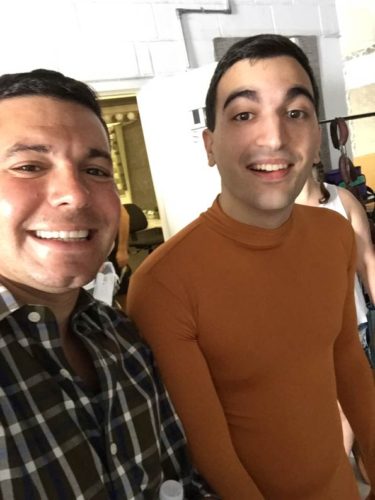
Adam Lebenstein and FC student Anthony Zaccardi on the set of a Tum’s commercial
or call (800) 755-7597

RRFC is education upgraded for the 21st century.
Get the latest career advice, insider production tips, and more!
Please fill out the following information, and RRFC Admissions will contact you to discuss our program offerings:
Stay in the Loop: Subscribe for RRFC news & updates!
© 2025 Recording Radio Film Connection & CASA Schools. All Rights Reserved.